If you’ve ever started a woodworking project feeling confident — only to end up with wasted lumber, uneven cuts, or a project that doesn’t quite fit together — you’re not alone.
Most beginner woodworking projects don’t fail because of a lack of skill.
They fail because of bad information and unrealistic expectations.
After reviewing dozens of beginner projects and plan sets, a few patterns show up again and again.
1. Plans Assume You Already Know Too Much
A surprising number of woodworking plans are written as if the reader already understands:
- Joinery basics
- Tool limitations
- Measurement tolerances
Steps get skipped. Diagrams are incomplete. Critical cuts are implied instead of explained.
For beginners, this leads to confusion halfway through a build — when fixing mistakes becomes expensive or impossible.
Good plans remove guesswork.
They show exactly what to do, even if it feels repetitive.
2. Measuring Isn’t the Problem — Interpreting Is
Most beginners hear “measure twice, cut once” and assume accuracy is the issue.
In reality, the problem is interpretation, not measuring.
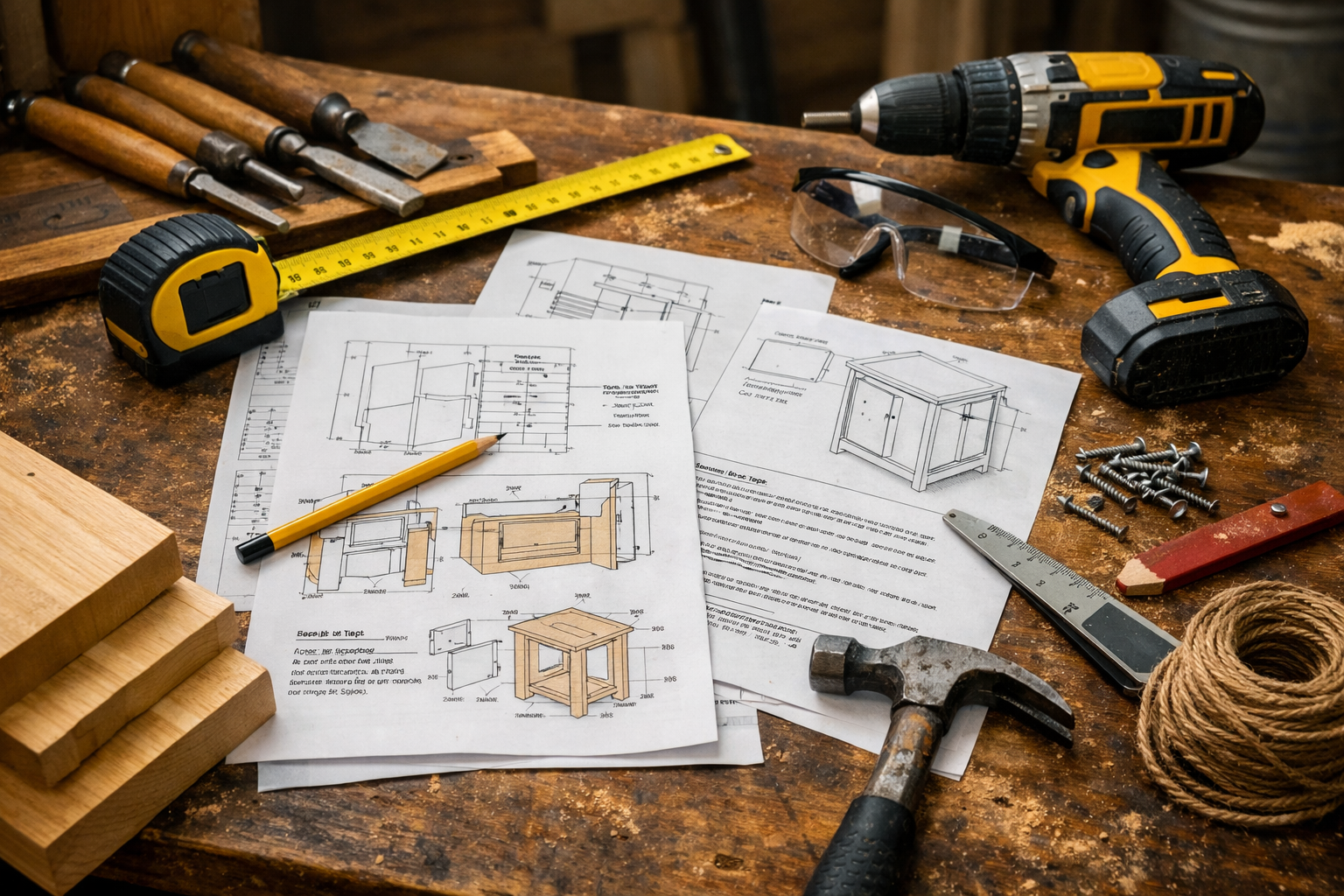
Plans that don’t include:
- Clear cut lists
- Visual references
- Step-by-step sequencing
Force builders to make assumptions. And assumptions are where projects fall apart.
Clear diagrams and labeled dimensions matter more than fancy designs.
3. Tool Overwhelm Stops Momentum
Many people quit projects early because they believe they need:
- Expensive tools
- Specialized equipment
- A fully equipped workshop
In truth, most beginner projects can be built with:
- A basic saw
- A drill
- A few clamps
- Patience
When plans list unnecessary tools or don’t offer alternatives, beginners stall before they even start.
4. Starting Too Big Is a Confidence Killer
Large furniture builds look impressive — but they’re a brutal place to start.
Smaller projects:
- Teach accuracy
- Build confidence
- Create visible progress
A finished simple project does more for learning than an abandoned complex one.
Momentum matters more than ambition early on.
5. The Best Woodworkers Didn’t “Figure It Out” Alone
Every skilled woodworker you admire followed:
- Clear instructions
- Proven systems
- Structured learning paths
The difference is guidance, not talent.
When beginners stop blaming themselves and start choosing better resources, everything changes.
Final Thought
Woodworking is supposed to be satisfying — not frustrating.
If you’re struggling, it’s not because you’re “bad at building.”
It’s because most beginner resources aren’t designed for beginners.
At Woodwork Weekly, the goal is simple:
cut through confusion and focus on what actually helps people build successfully.
More practical breakdowns coming soon.